Turning Email Into a Revenue Engine
One promotional calendar, smarter segmentation, and $222K in email revenue in four months.
In four months, I rebuilt the Plaid Crafts email program around one promotional calendar and smarter segmentation. Email revenue grew from $51.6K to $222K, open rates rose from 19% to 34%, and one automated flow became six.
The challenge
One family of brands, one promotional story
I joined Plaid Crafts to optimize its website, and it quickly became clear the work couldn't stop at the site. Each month brought a new set of promotions across the brand family, and the emails carrying them didn't yet reflect email best practices. Some asked readers to take too many actions at once, the visual style shifted from send to send, and without consistent testing, emails often broke across screens and email clients.
The other opportunity was in the data. The purchase history to understand what each customer was buying already existed, but the messaging wasn't putting it to work. A painter and a cross-stitcher were receiving the same email.
So I used the website engagement to bring the site and the inbox onto one promotional calendar across the brands, and rebuilt segmentation around buying behavior so every email spoke to the crafter who received it.

Segmentation
Speaking to each crafter, at scale
With segments built around buying behavior, I could grow reach without diluting the message. I moved from a single engaged segment to multi-tier targeting, and the audience grew from 1.3M to 9.3M recipients. Deliverability improved at the same time: bounce rate fell from 0.56% to 0.47%, and spam complaints from 0.038% to 0.034%.
Reaching seven times as many people while inbox health got better is the result I'm proudest of.
Campaigns
A calendar with a purpose behind every send
Once the site and the inbox shared a calendar, campaign volume could grow with intent. I tripled output, from 26 campaigns to 81 over the same length of time, balancing brand spotlights, product launches, promotions, and engagement content across the brand family.
| Campaigns | Before | After | Change |
|---|---|---|---|
| Revenue | $46.4K | $160.6K | +246% |
| Placed orders | 457 | 2,055 | +350% |
| Open rate | 19.2% | 34.0% | +77% |
| Campaigns sent | 26 | 81 | +212% |
Lifecycle
Building the lifecycle around the customer
The program had one automated flow, cart abandonment. I designed and launched five more, including a welcome series with 20% off, a mystery welcome series, and browse abandonment, so customers got a relevant message at each stage of their journey. Flow revenue grew 1,063% to $61.3K across 872 orders, and the welcome series alone brought in $32,961.
| Flow | Revenue | Orders |
|---|---|---|
| Welcome Series (20% Off) | $32,961 | 510 |
| Cart Abandonment | $17,086 | 228 |
| Browse Abandonment | $7,192 | 76 |
| Mystery Welcome Series | $3,145 | 45 |
Design and QA
Design and testing that held up everywhere
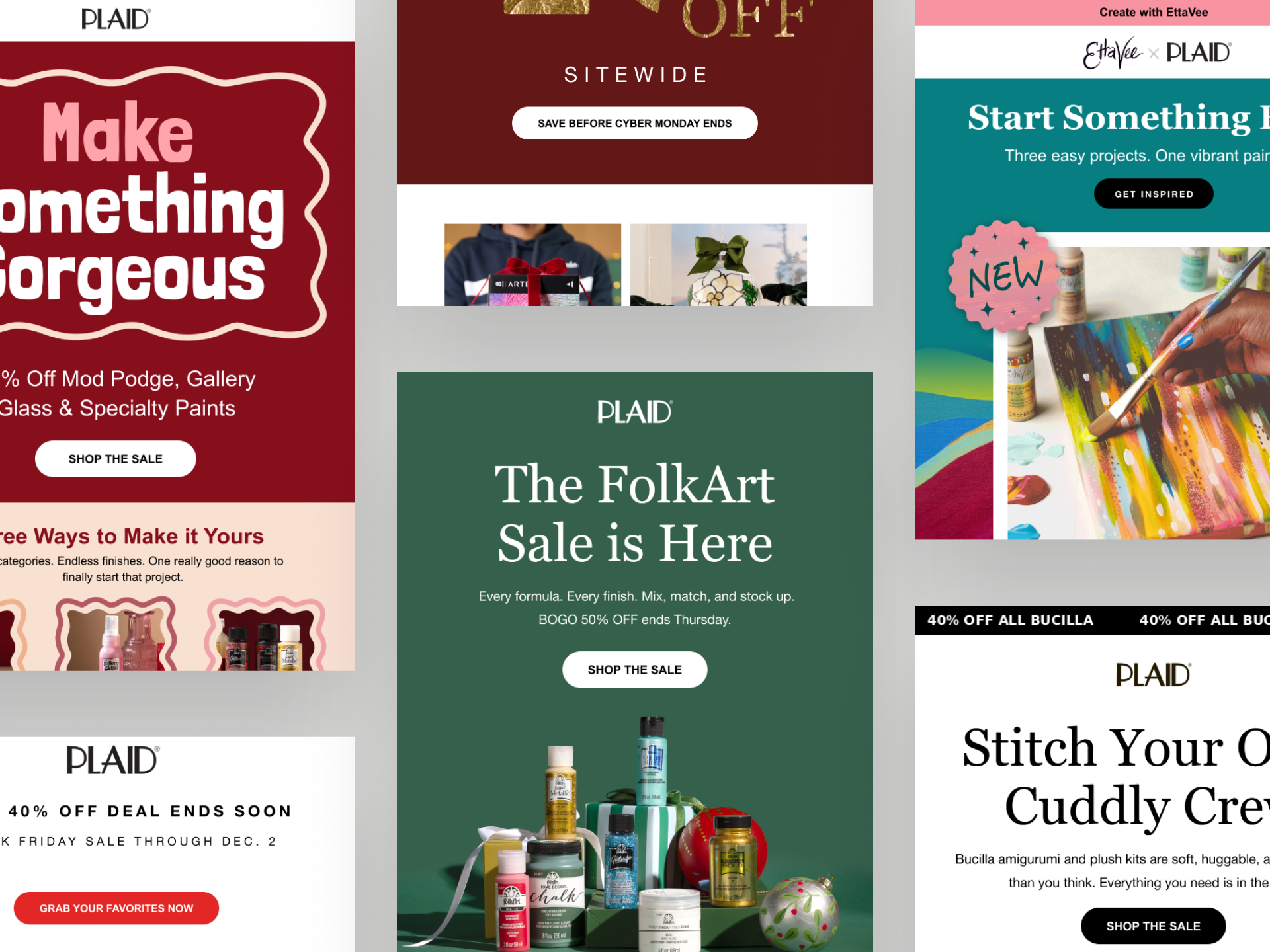
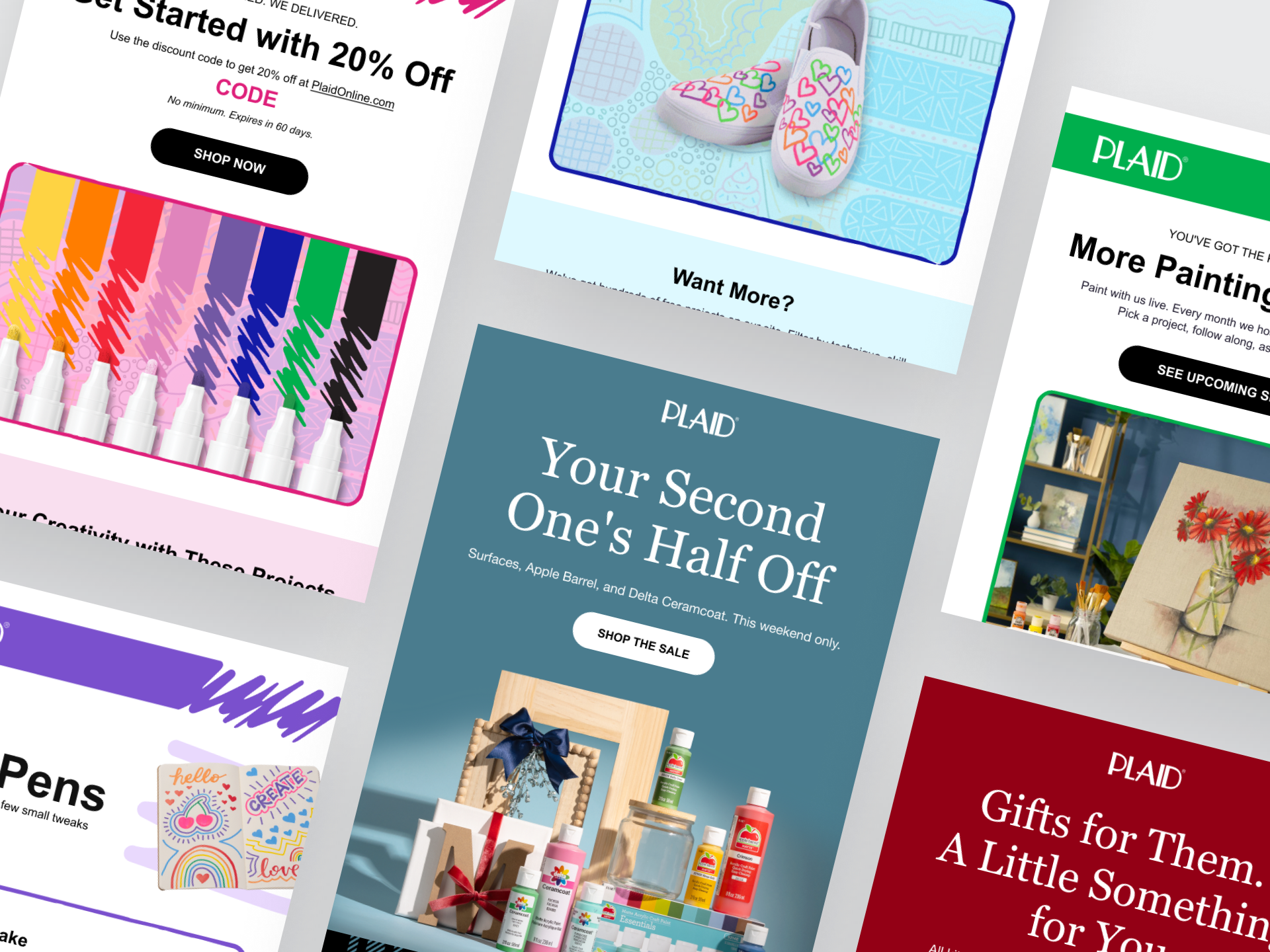
Every email was built with a clean hierarchy, on-brand visuals, and a clear path to the click, so the inbox looked and felt like the site. Nothing went out untested. Each send went through Litmus across 90+ email clients, with dark mode and accessibility checks, and then onto real phones before launch. A/B tests on subject lines, preview text, hero creative, CTAs, and send times meant every campaign learned from the one before it.
The result
Email revenue in four months, a 330% increase over $51.6K, with the website and the inbox finally working from the same playbook.